Buy smart-screens.com ?
We are moving the project
smart-screens.com .
Are you interested in purchasing the domain
smart-screens.com ?
domain@kv-gmbh.de · 0541-91531010
Buy smart-screens.com ?
What is the biserial correlation coefficient and the phi coefficient and the chi coefficient?
The biserial correlation coefficient is a measure of the strength and direction of the relationship between a continuous variable and a dichotomous variable. It is calculated when one variable is continuous and the other is dichotomous. The phi coefficient is a measure of association between two dichotomous variables. It is calculated using a 2x2 contingency table and ranges from -1 to 1, with 0 indicating no association and 1 indicating a perfect association. The chi coefficient is a measure of association between two dichotomous variables, similar to the phi coefficient. It is also calculated using a 2x2 contingency table and ranges from -1 to 1, with 0 indicating no association and 1 indicating a perfect association. **
Which correlation coefficient?
The correlation coefficient is a statistical measure that quantifies the strength and direction of a relationship between two variables. It ranges from -1 to 1, with -1 indicating a perfect negative correlation, 0 indicating no correlation, and 1 indicating a perfect positive correlation. The correlation coefficient is used to determine how closely the two variables are related and can help in making predictions or understanding the nature of the relationship between them. **

Similar search terms for Coefficient
Top-Angebote
Products related to Coefficient:
-
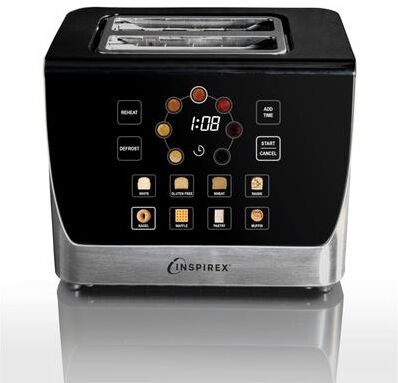
Inspirex Interactive Touchscreen Automatic ToasterWith the Inspirex Touchscreen Toaster, perfection is at your fingertips. Toast your favorite type of bread, bagel, English muffin, or pastry, perfectly crispy on the outside while keeping the inside moist and delicious.99,99 $*Shipping: 0,00 $Secure redirect to the provider
-
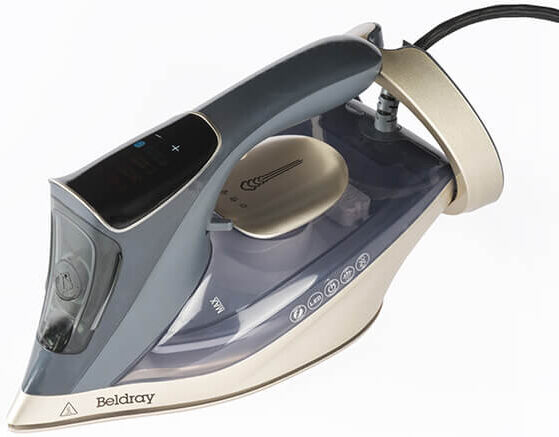
Beldray Digital LED Touchscreen Steam IronTake the guesswork out of ironing with the Beldray Digital LED Touchscreen Steam Iron. Designed for precision and ease of use, this advanced steam iron combines powerful performance with intuitive digital controls, helping you achieve smooth, crease‑free results across a wide range of fabrics. Powered by an impressive 3200W, the iron heats quickly and delivers consistent steam through a smooth ceramic soleplate that glides effortlessly over garments. The digital LED touchscreen features four preset fabric heat modes, allowing you to select the correct temperature with confidence and reduce the risk of scorching delicate items. For added reassurance, the iron includes an auto shut‑off function along with self‑clean, anti‑calc and anti‑drip features to support long‑lasting performance and protect clothing from water marks. A generous 380ml water tank, filled easily using the included measuring cup, allows longer ironing sessions with fewer refills. Finished with a 3‑metre power cord for extended reach, this steam iron offers flexibility, control and modern convenience. Supplied with a manufacturer’s 1‑year guarantee. Power: 3200W. Water Tank Capacity: 380ml. Cord Length: 3m. Dimensions: 30(L) x 15.2(W) x 13(H) cm.34,99 £*Shipping: 3,50 £Secure redirect to the provider
-
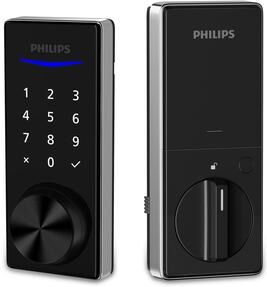
Philips Touchscreen Smart Deadbolt Door LockChoose the unlock method that fits your lifestyle in the moment you arrive home. You can choose from unlocking with PIN codes or keys, or just unlock the door with a gentle touch of your Philips Home Access app on your smartphone.137,99 $*Shipping: 0,00 $Secure redirect to the provider

-
What is the binomial coefficient?
The binomial coefficient, denoted as ${n \choose k}$, represents the number of ways to choose k elements from a set of n elements without regard to the order of selection. It is calculated using the formula ${n \choose k} = \frac{n!}{k!(n-k)!}$, where n! denotes the factorial of n. The binomial coefficient is commonly used in combinatorics and probability theory to calculate the number of combinations or possibilities in a given scenario. **
-
What is the Lusor coefficient?
The Lusor coefficient is a measure of the ability of a fluid to carry sediment. It is used in the field of sediment transport to quantify the sediment-carrying capacity of a fluid, such as water or air. The coefficient takes into account factors such as the size and density of the sediment particles, as well as the velocity and viscosity of the fluid. A higher Lusor coefficient indicates a greater ability of the fluid to transport sediment. **
-
What is the validity coefficient?
The validity coefficient is a statistical measure that quantifies the relationship between a predictor (such as a test or assessment) and a criterion (such as job performance or academic achievement). It indicates the degree to which the predictor is able to accurately predict the criterion. A higher validity coefficient suggests a stronger relationship between the predictor and the criterion, indicating that the predictor is more effective in predicting the criterion. Validity coefficients are commonly used in the field of psychometrics and are important for evaluating the effectiveness of selection tools and assessments. **
-
What is a Gini coefficient?
A Gini coefficient is a measure of income inequality within a population. It is calculated based on the distribution of income or wealth among individuals or households in a given country or region. The coefficient ranges from 0 to 1, with 0 representing perfect equality (everyone has the same income) and 1 representing perfect inequality (one person has all the income). A higher Gini coefficient indicates greater income inequality, while a lower coefficient indicates more equal distribution of income. **

What is the multiplication coefficient?
The multiplication coefficient is a number that represents the factor by which a quantity is multiplied. It is used to scale or increase the value of a quantity by a certain amount. For example, if the multiplication coefficient is 2, then the quantity is doubled. The multiplication coefficient is often used in mathematical equations and calculations to represent the relationship between different quantities. **
How to calculate the Gini coefficient?
The Gini coefficient is calculated by dividing the area between the Lorenz curve (which represents the actual distribution of income or wealth) and the line of perfect equality by the total area under the line of perfect equality. This ratio is then subtracted from 1 to get the Gini coefficient. The Gini coefficient ranges from 0 (perfect equality) to 1 (perfect inequality). The formula for calculating the Gini coefficient is: G = (A / (A + B)), where A is the area between the Lorenz curve and the line of perfect equality, and B is the area under the line of perfect equality. **
Top-Angebote
Products related to Coefficient:
-
MegaChef Immersion Circulation Precision Sous-Vide Cooker With Digital Touchscreen DisplayThe sous-vide immersion circulator cooker brings professional cooking techniques to your home. It offers complete control over the cooking process,unmatched by other cooking techniques.89,49 $*Shipping: 0,00 $Secure redirect to the provider
-
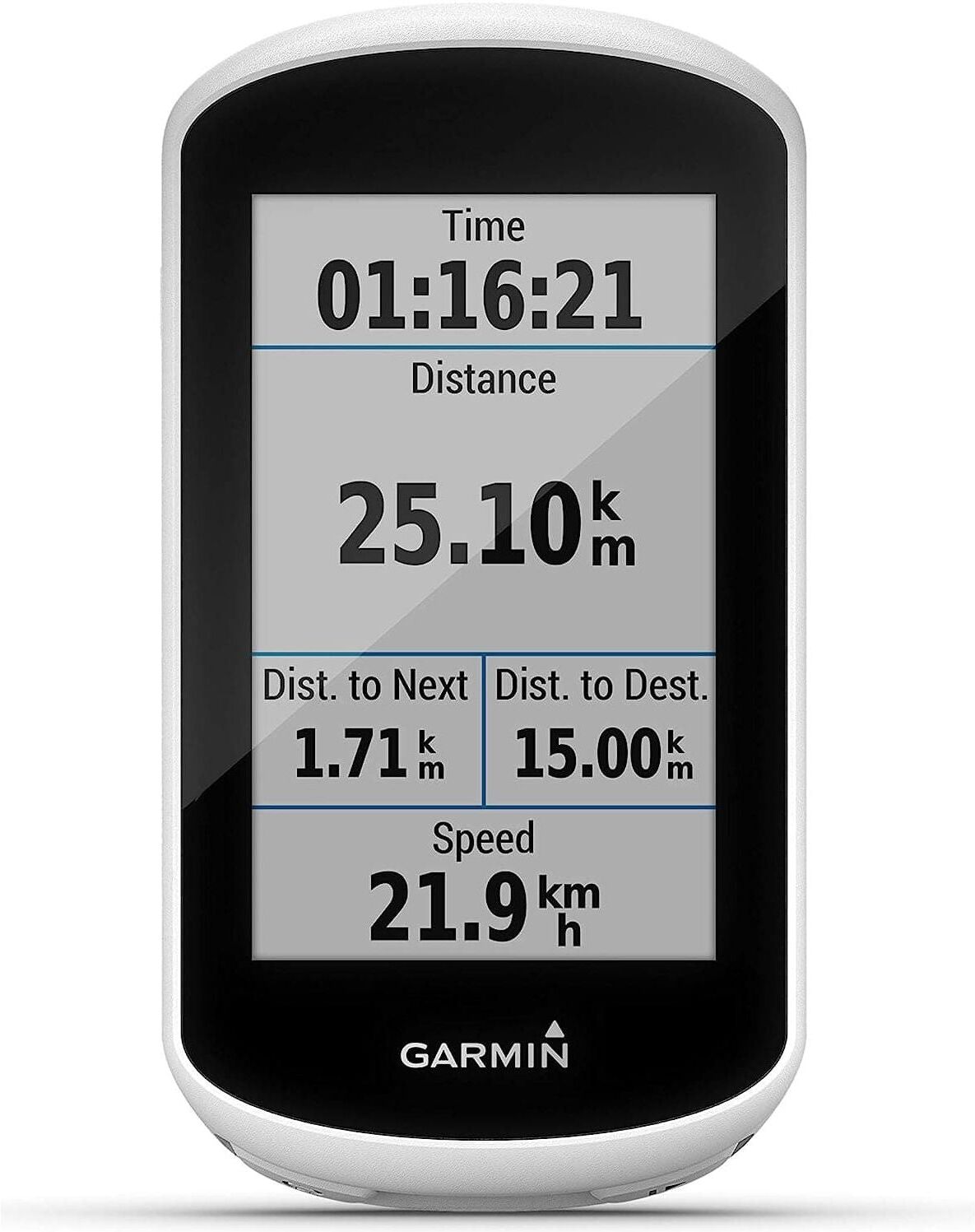
Garmin Edge Explore Touchscreen Touring Bike Computer with Connected Features, White, Used - Like NewOverview The Garmin Edge Explore Touchscreen Bike Computer is designed for cyclists who want simple navigation, smart connectivity, and reliable ride tracking. Featuring a large responsive touchscreen display , this GPS cycling computer provides easy route navigation, real-time ride data, and compatibility with a range of Garmin cycling accessories. Built for adventure and everyday riding, the Edge Explore offers turn-by-turn navigation, preloaded cycling maps, and extended battery life , helping riders explore new routes with confidence. Its intuitive interface and safety features make it an excellent companion for road cyclists, commuters, and touring enthusiasts. Key Features Large Touchscreen Display – Easy-to-read colour display with intuitive touch controls. GPS Cycling Computer – Accurate ride tracking including speed, distance, and route data. Preloaded Cycling Maps – Navigate confidently with detailed maps designed for cyclists. Turn-by-Turn Navigation – Follow routes with clear directions and on-screen prompts. Smart Notifications – Receive calls, messages, and app alerts when paired with a smartphone. Cycling Safety Features – Compatible with Garmin Varia radar and smart lights. Long Battery Life – Designed for extended rides and long cycling adventures. ANT+ and Bluetooth Connectivity – Pair with compatible sensors and accessories. Activity Tracking – Monitor ride statistics and performance data. Durable Outdoor Design – Built to handle various riding environments. Benefits The Garmin Edge Explore provides cyclists with an easy-to-use GPS navigation system designed specifically for cycling routes. With preloaded maps and turn-by-turn navigation, riders can confidently explore new areas without worrying about getting lost. The large touchscreen display makes it simple to view ride data, navigate routes, and access settings while riding. Smart connectivity features allow cyclists to stay connected with notifications and sync ride data with compatible apps for tracking progress. Compatibility with Garmin safety accessories such as radar and smart lights adds an extra layer of awareness on the road, making the Edge Explore an ideal companion for both recreational and serious cyclists. Specifications Specification Details Brand Garmin Model Edge Explore EAN / Barcode [Ean] Type GPS Bike Computer Display Colour Touchscreen Navigation Turn-by-Turn Navigation Maps Preloaded Cycling Maps Connectivity ANT+, Bluetooth Smart Features Smartphone Notifications Battery Life Up to 12 hours Compatibility Garmin Sensors & Varia Devices Water Rating IPX7 Dimensions Approx. 105 × 55 × 22 mm Weight Approx. 116 g Package Contents Garmin Edge Explore Bike Computer, Mounting Kit, USB Charging Cable199,00 £*Shipping: 0,00 £Secure redirect to the provider
-
Inspirex Interactive Touchscreen Automatic ToasterWith the Inspirex Touchscreen Toaster, perfection is at your fingertips. Toast your favorite type of bread, bagel, English muffin, or pastry, perfectly crispy on the outside while keeping the inside moist and delicious.99,99 $*Shipping: 0,00 $Secure redirect to the provider
-
What is the biserial correlation coefficient and the phi coefficient and the chi coefficient?
The biserial correlation coefficient is a measure of the strength and direction of the relationship between a continuous variable and a dichotomous variable. It is calculated when one variable is continuous and the other is dichotomous. The phi coefficient is a measure of association between two dichotomous variables. It is calculated using a 2x2 contingency table and ranges from -1 to 1, with 0 indicating no association and 1 indicating a perfect association. The chi coefficient is a measure of association between two dichotomous variables, similar to the phi coefficient. It is also calculated using a 2x2 contingency table and ranges from -1 to 1, with 0 indicating no association and 1 indicating a perfect association. **
-
Which correlation coefficient?
The correlation coefficient is a statistical measure that quantifies the strength and direction of a relationship between two variables. It ranges from -1 to 1, with -1 indicating a perfect negative correlation, 0 indicating no correlation, and 1 indicating a perfect positive correlation. The correlation coefficient is used to determine how closely the two variables are related and can help in making predictions or understanding the nature of the relationship between them. **
-
What is the binomial coefficient?
The binomial coefficient, denoted as ${n \choose k}$, represents the number of ways to choose k elements from a set of n elements without regard to the order of selection. It is calculated using the formula ${n \choose k} = \frac{n!}{k!(n-k)!}$, where n! denotes the factorial of n. The binomial coefficient is commonly used in combinatorics and probability theory to calculate the number of combinations or possibilities in a given scenario. **
-
What is the Lusor coefficient?
The Lusor coefficient is a measure of the ability of a fluid to carry sediment. It is used in the field of sediment transport to quantify the sediment-carrying capacity of a fluid, such as water or air. The coefficient takes into account factors such as the size and density of the sediment particles, as well as the velocity and viscosity of the fluid. A higher Lusor coefficient indicates a greater ability of the fluid to transport sediment. **
Similar search terms for Coefficient
-
Beldray Digital LED Touchscreen Steam IronTake the guesswork out of ironing with the Beldray Digital LED Touchscreen Steam Iron. Designed for precision and ease of use, this advanced steam iron combines powerful performance with intuitive digital controls, helping you achieve smooth, crease‑free results across a wide range of fabrics. Powered by an impressive 3200W, the iron heats quickly and delivers consistent steam through a smooth ceramic soleplate that glides effortlessly over garments. The digital LED touchscreen features four preset fabric heat modes, allowing you to select the correct temperature with confidence and reduce the risk of scorching delicate items. For added reassurance, the iron includes an auto shut‑off function along with self‑clean, anti‑calc and anti‑drip features to support long‑lasting performance and protect clothing from water marks. A generous 380ml water tank, filled easily using the included measuring cup, allows longer ironing sessions with fewer refills. Finished with a 3‑metre power cord for extended reach, this steam iron offers flexibility, control and modern convenience. Supplied with a manufacturer’s 1‑year guarantee. Power: 3200W. Water Tank Capacity: 380ml. Cord Length: 3m. Dimensions: 30(L) x 15.2(W) x 13(H) cm.34,99 £*Shipping: 3,50 £Secure redirect to the provider
-
Philips Touchscreen Smart Deadbolt Door LockChoose the unlock method that fits your lifestyle in the moment you arrive home. You can choose from unlocking with PIN codes or keys, or just unlock the door with a gentle touch of your Philips Home Access app on your smartphone.137,99 $*Shipping: 0,00 $Secure redirect to the provider
-
What is the validity coefficient?
The validity coefficient is a statistical measure that quantifies the relationship between a predictor (such as a test or assessment) and a criterion (such as job performance or academic achievement). It indicates the degree to which the predictor is able to accurately predict the criterion. A higher validity coefficient suggests a stronger relationship between the predictor and the criterion, indicating that the predictor is more effective in predicting the criterion. Validity coefficients are commonly used in the field of psychometrics and are important for evaluating the effectiveness of selection tools and assessments. **
-
What is a Gini coefficient?
A Gini coefficient is a measure of income inequality within a population. It is calculated based on the distribution of income or wealth among individuals or households in a given country or region. The coefficient ranges from 0 to 1, with 0 representing perfect equality (everyone has the same income) and 1 representing perfect inequality (one person has all the income). A higher Gini coefficient indicates greater income inequality, while a lower coefficient indicates more equal distribution of income. **
-
What is the multiplication coefficient?
The multiplication coefficient is a number that represents the factor by which a quantity is multiplied. It is used to scale or increase the value of a quantity by a certain amount. For example, if the multiplication coefficient is 2, then the quantity is doubled. The multiplication coefficient is often used in mathematical equations and calculations to represent the relationship between different quantities. **
-
How to calculate the Gini coefficient?
The Gini coefficient is calculated by dividing the area between the Lorenz curve (which represents the actual distribution of income or wealth) and the line of perfect equality by the total area under the line of perfect equality. This ratio is then subtracted from 1 to get the Gini coefficient. The Gini coefficient ranges from 0 (perfect equality) to 1 (perfect inequality). The formula for calculating the Gini coefficient is: G = (A / (A + B)), where A is the area between the Lorenz curve and the line of perfect equality, and B is the area under the line of perfect equality. **
* All prices are inclusive of VAT and, if applicable, plus shipping costs. The offer information is based on the details provided by the respective shop and is updated through automated processes. Real-time updates do not occur, so deviations can occur in individual cases. ** Note: Parts of this content were created by AI.